Would you pay hundreds of Euros for a sofa that hides a colony of bed bugs or a snapped wooden frame? Most buyers focus only on the fabric colour. The real value stays hidden beneath the cushions. Learning how to check used sofa condition is the only way to separate a genuine bargain from an expensive mistake. You want a sustainable home without the “new” price tag, but the fear of structural sagging or unhygienic pests is a valid concern.
We believe buying second-hand should be simple and risk-free. This article promises to teach you exactly how to spot defects, test foam density, and identify hygiene issues before you pay. You will get a clear checklist of what to touch, smell, and see during your inspection. We also provide a plan for navigating narrow Dutch doorways and moving your furniture across the Netherlands safely. Gain the confidence to negotiate a better deal or walk away from a dud.
Key Takeaways
- Identify high-quality frames using the “Lift Test” to avoid structural sagging and broken supports.
- Learn exactly how to check used sofa condition by testing foam resilience and inspecting upholstery seams for wear.
- Detect hidden hygiene risks like bed bugs and deep fabric odours using a professional inspection protocol.
- Measure narrow Dutch doorways and hallways correctly to ensure your second-hand sofa fits through the entrance.
- Reduce purchase risk by comparing private Marktplaats deals with vetted second-hand shops and professional transport services in Tilburg.
The Foundation: Inspecting the Sofa’s Structural Integrity
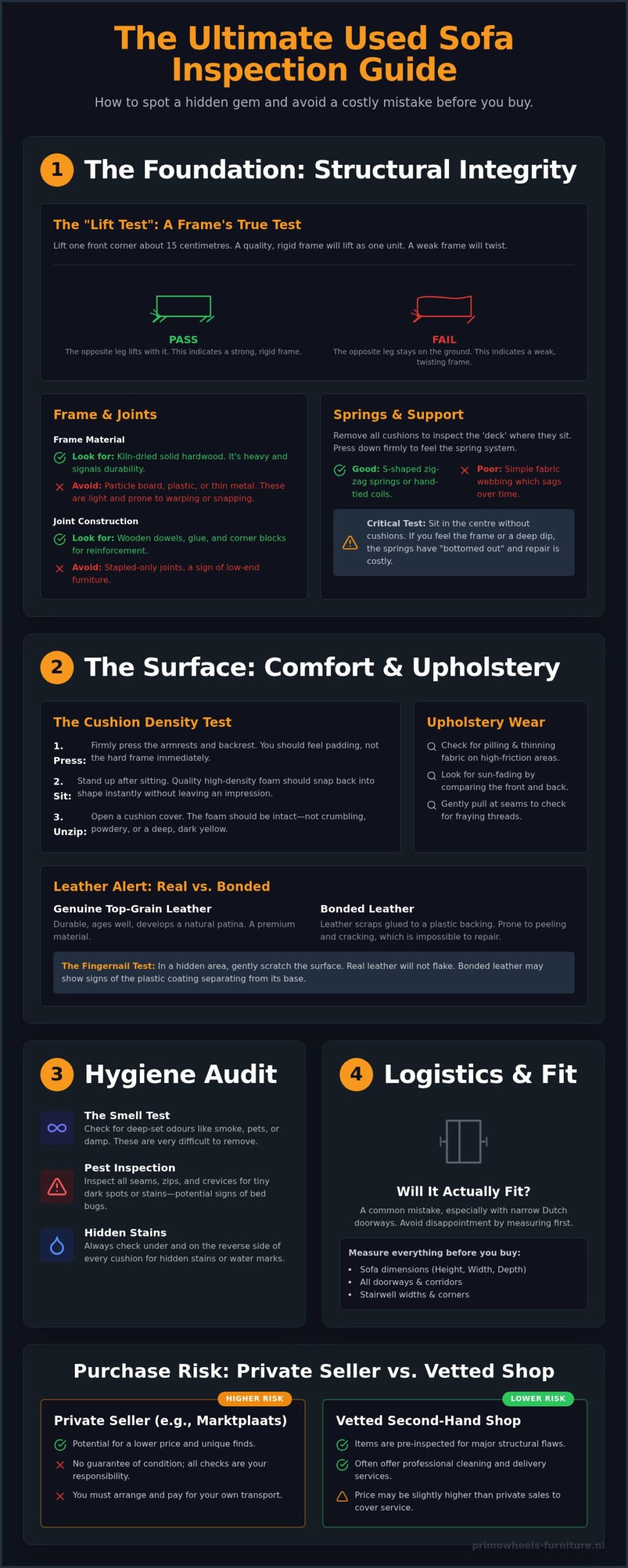
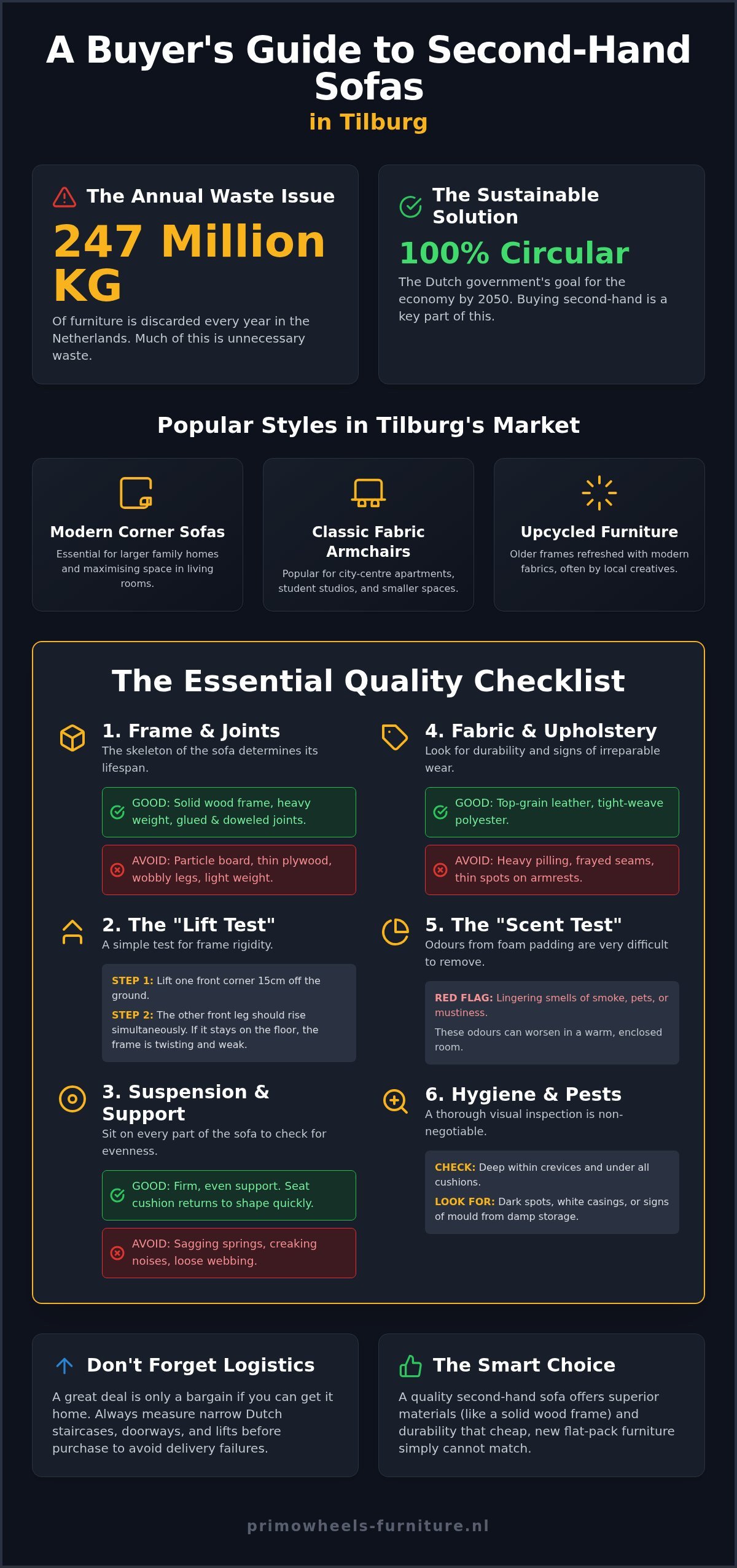
The frame is the skeleton of the sofa. It determines if the piece lasts a decade or collapses within a year. When learning how to check used sofa condition, start with the weight. Perform the “Lift Test” by lifting one front corner or leg of the sofa about 15 centimetres off the floor. If the other front leg stays on the ground, the frame is weak and twisting. A high-quality frame stays rigid, and the opposite leg should lift simultaneously.
Material choice is critical for longevity. Solid hardwood frames are the standard for durability. Cheap alternatives use particle board, plastic, or thin metal, which often warp or snap under pressure. Kiln-dried hardwood is the gold standard for sofa frames because the process removes moisture to prevent cracking and warping over time. Understanding Upholstery construction helps you spot these differences before buying. If the sofa feels light or “hollow” when you tap the frame, it’s likely made of inferior materials.
Listen to the furniture. Sit down firmly in several spots and lean against the arms. Squeaking or creaking sounds usually mean the internal joints are loose or the wood is rubbing against metal fasteners. Silent sofas indicate tight, secure construction. Avoid any piece that groans under normal weight.
Testing the Joints and Legs
Examine how the legs attach to the body. Ideally, legs are part of the frame or held on by heavy-duty bolts. Avoid sofas where legs are merely screwed into the bottom through thin fabric. Look for wobbling. This often signals stripped screws or internal wood rot. Inspect the joints under the fabric if possible. Stapled joints are a hallmark of low-end, disposable furniture. High-quality pieces use wooden dowels, glue, and corner blocks for reinforcement.
The Sagging Check
Knowing how to check used sofa condition involves looking past the fabric. Remove every cushion to see the “deck,” which is the flat surface where cushions sit. Press down to feel the spring system. Most quality sofas use “S-shaped” zig-zag springs or hand-tied coils. If you see simple green or black webbing, the support won’t last as long. Sit in the dead centre of the sofa without the cushions. If you feel the frame or a deep dip, the springs have “bottomed out.” This repair is often more expensive than the sofa itself.
Comfort and Surface: Evaluating Upholstery and Filling
Aesthetics are often deceiving in the second-hand market. A sofa might look pristine in a photo but feel like a wooden bench when you sit down. Knowing how to check used sofa condition requires a deep dive into what lies beneath the fabric. The type of filling used determines whether the piece remains comfortable or becomes a lumpy mess within months. High-density foam is the standard for support. It should feel firm and snap back instantly when you stand up. In contrast, down-filled cushions offer a luxury feel but require constant fluffing and can lose their shape over time. Poly-wrapped foam provides a middle ground, offering a soft surface with a supportive core.
Leather quality is another area where buyers often get caught out. Genuine top-grain leather is durable and develops a patina. However, many used sofas are made from “bonded” leather. This material consists of leather scraps glued to a plastic backing. It looks like the real thing initially but eventually peels and cracks in a way that’s impossible to repair. Scratch a hidden area with your fingernail. Real leather won’t flake, whilst bonded leather often shows signs of the plastic coating separating from the base. Following established rules for buying secondhand furniture helps you avoid these low-quality materials that won’t survive a move.
The Cushion Density Test
Don’t just sit in the centre. Press firmly into the armrests and the top of the backrest. If you can feel the wooden frame immediately, the padding has compressed too much. This is a sign of heavy use or low-quality foam. Check if the cushions are reversible. Reversible cushions allow you to flip them to hide minor stains or even out the wear. Always unzip at least one cushion cover. Look at the foam inside. If it’s crumbling, dark yellow, or has a powdery residue, the material is disintegrating. If you prefer to skip the guesswork, you can find a vetted second-hand sofa that has already been inspected for these issues.
Upholstery Wear and Tear
Inspect high-friction zones like the front of the armrests and the headrest area. These spots often show thinning fabric or “pilling”-those small, annoying balls of fibre. Look at the sofa in natural light if possible. Sun-fading can be dramatic, making the back of a sofa look like a completely different colour than the front. Finally, examine the seams. Pull the fabric gently near the stitching. If the threads are fraying or the holes are widening, the upholstery is reaching its limit. These details are essential when learning how to check used sofa condition effectively.
The Hygiene Audit: Pests, Smells, and Allergens
Hygiene is often the dealbreaker in the second-hand market. A sofa can look perfect in a dimly lit room but harbour invisible issues that are difficult to resolve. When learning how to check used sofa condition, hygiene must be your priority. Start with a strict “Bed Bug Protocol”. These pests are tiny and hide in the tightest seams or staple lines. Look for clusters of small black spots, which are faecal matter, or pale yellow casings left behind during growth. Use a torch to peer into the gaps between the frame and the upholstery. If you see any evidence of infestation, walk away immediately.
Following basic second-hand shopping safety tips ensures you don’t bring a costly problem into your home. Beyond insects, smells tell the real story of a piece of furniture. Perform a “Smell Test” by putting your nose directly against the fabric on the armrests and back cushions. Cigarette smoke is particularly stubborn. Sellers often use heavy air fresheners to mask the scent, but the chemical smell of a “mountain breeze” spray in a dusty house is a red flag. Smoke particles settle deep inside the foam and will eventually release back into your living room once the spray wears off.
Detecting Pests and Insects
Flip the sofa onto its back to inspect the underside “dust cover”. This thin black fabric often hides secrets. Look for small holes, shredded material, or insect debris that suggest mice or beetles have nested inside. Check the deep crevices where the backrest meets the seat. If you suspect any pest activity but still want the piece, a second-hand sofa should be quarantined in a garage or shed until it is professionally treated. This prevents transferring an infestation to your carpets and other furniture.
Odour and Allergen Identification
Pet allergens are another hidden cost to consider. Even on a sofa that looks clean, dander and fine hair become embedded in the weave of the fabric. If you suffer from allergies, run your hand firmly across the upholstery to see if hair rises to the surface. Feel for dampness or a clammy sensation. This usually indicates mould or mildew growth within the internal foam, often caused by storage in a damp Dutch garage or basement. Ask the seller directly about their home environment, specifically regarding pets and smoking. Their reaction is often as telling as their answer. Knowing how to check used sofa condition means being a detective before you commit your money.
Logistics and Fit: Will It Actually Enter Your Home?
Finding a great deal is only half the battle. In the Netherlands, the physical journey from the seller’s living room to yours is often the hardest part. Many buyers learn how to check used sofa condition but forget to check their own hallway dimensions. Tilburg’s traditional architecture frequently features narrow doorways and steep, winding staircases. A sofa that looks small in a large showroom can suddenly become an immovable object in a tight Dutch corridor. Check for removable legs during your inspection. This simple feature can reduce the sofa’s height by 10 to 15 centimetres, which is often the difference between a successful delivery and a returned item.
Diagonal depth is the most overlooked measurement. This is the distance from the top back corner of the frame to the bottom front corner. It tells you if the piece can pivot around sharp corners or fit into a standard apartment lift. If the sofa is deep and the frame is rigid, you’ll need more clearance than the width alone suggests. Don’t assume a sofa will fit just because your current one does. Every frame design has different pivot points.
Measuring for Success
Grab a tape measure before you visit the seller. You need four critical numbers: the sofa’s width, the total height, the diagonal depth, and the depth of the seat. Compare these against your entry points at home. Measure your front door width, the narrowest point of your hallway, and the height of your ceiling for upright turns. If you live in an apartment, check the lift dimensions. A sofa that won’t fit in the lift requires a furniture hoist, which adds significant unexpected costs to your purchase.
Transport and Moving Solutions
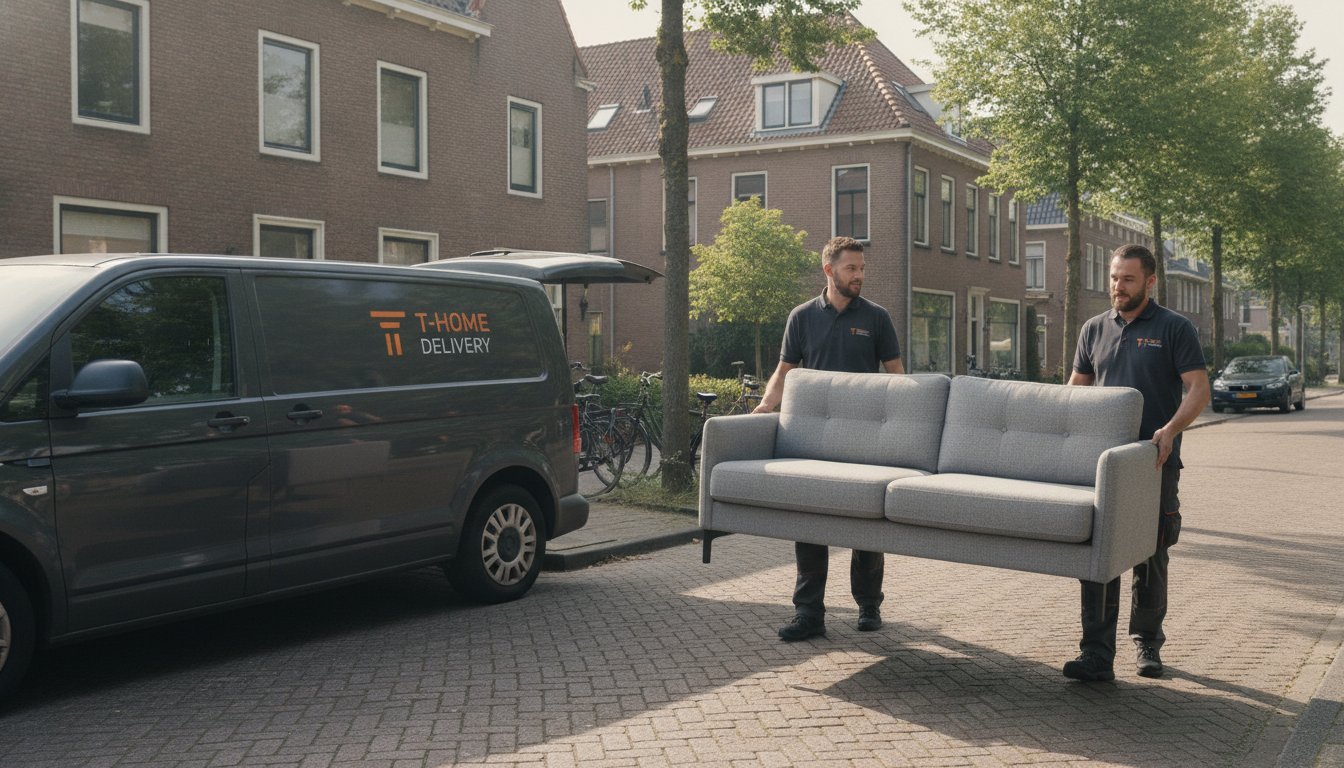
Transporting a large piece of furniture without the right equipment is risky. DIY attempts in small cars or with open trailers often lead to ripped upholstery or warped frames. Professional Furniture transport Tilburg services provide the necessary protection for your investment. They use heavy-duty blankets and secure strapping systems to prevent shifting during transit. This is especially important for second-hand items that no longer have their original packaging.
Calculating the true cost of transport is essential. Factor in the price of van hire, fuel, and the time spent navigating traffic. Often, hiring a specialist is more cost-effective than risking damage to your vehicle or your new furniture. If you want a safe way to get your bargain home, a furniture transport service handles the heavy lifting and the narrow Dutch corners for you. Knowing how to check used sofa condition includes planning for a safe arrival.
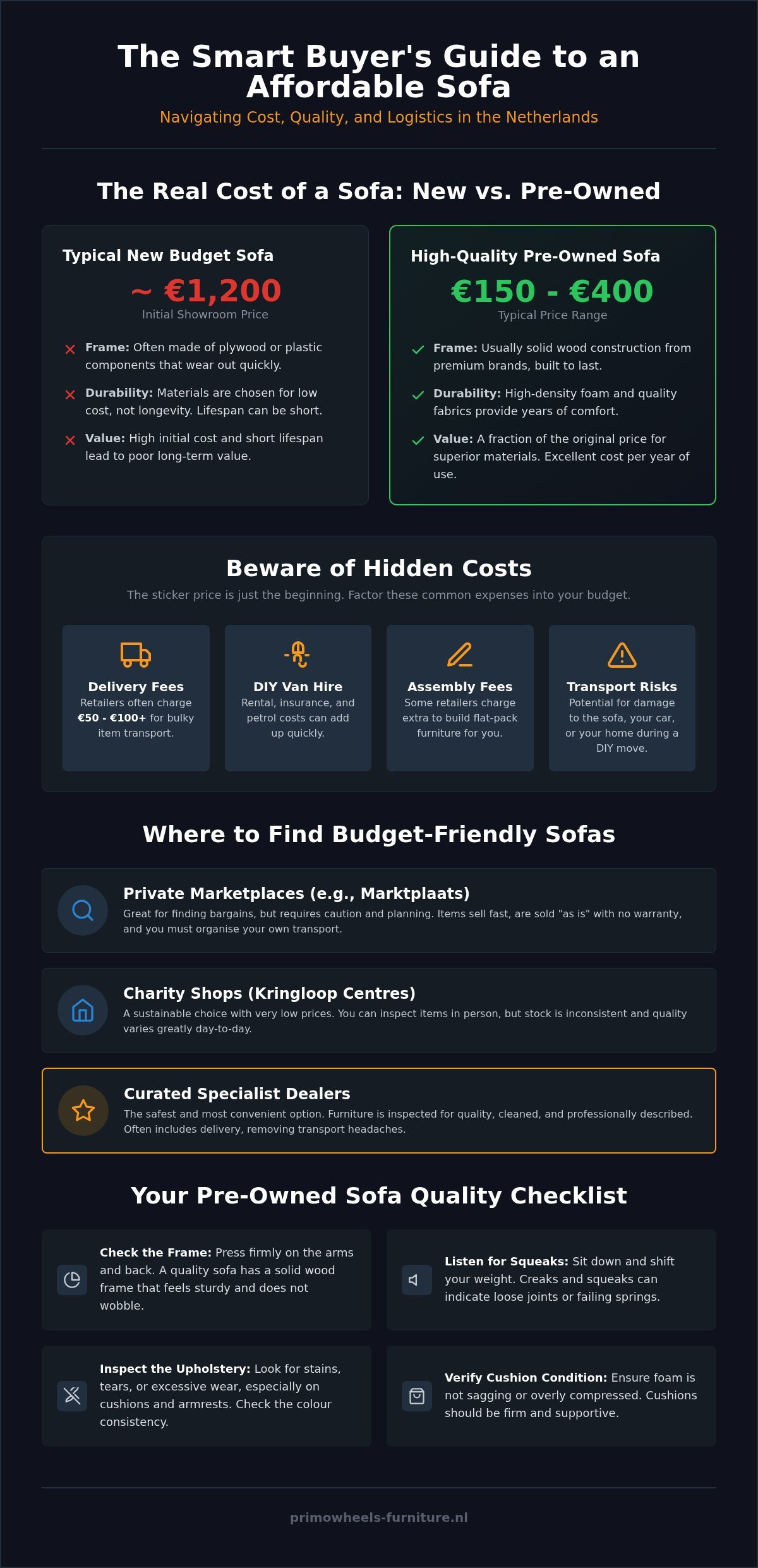
Tilburg offers several avenues for finding second-hand furniture. Marktplaats is the largest platform for private sales in the Netherlands. It allows for direct negotiation and often the lowest prices. However, private sellers aren’t required to disclose defects. You carry the full burden of knowing how to check used sofa condition yourself. If you discover bed bugs or a snapped frame after you’ve paid and loaded the van, there’s rarely any recourse. Professional second-hand shops and curated resellers offer a safer middle ground. They rely on their reputation and often perform basic cleaning or repairs before listing an item. These businesses provide more transparency than a random car boot sale or an unverified online advert.
When dealing with private sellers, use the flaws you find as leverage. If the “Lift Test” revealed a slight creak or if the upholstery has minor pilling, mention these specifically. Be pragmatic. Don’t haggle just for the sake of it, but ensure the price reflects the actual state of the piece. Most sellers in the Tilburg area are open to reasonable offers if you can point to a specific repair cost, such as professional deep cleaning. Always ask about the reason for the sale and the age of the item to gauge its remaining lifespan. If you want to understand the full landscape of budget options before committing, our guide to finding an affordable sofa in the Netherlands covers where to look and what to avoid across the Dutch market. For a deeper look at sourcing quality pieces without overspending, the cheap sofa second hand buyer’s reference for 2026 walks you through every step of finding, inspecting, and transporting a budget-friendly sofa in the current market.
The Primowheels&Furniture Advantage
Choosing a specialist provider removes the anxiety of the unknown. Our sofas are pre-inspected for structural integrity and hygiene, so you don’t have to worry about hidden pests or broken joints. We focus on quality control so you can skip the most stressful parts of how to check used sofa condition. Logistics are also handled in-house. Direct delivery options mean you don’t have to rent a van or navigate narrow streets yourself. Booking is handled through a simple WhatsApp message for both furniture purchases and transport services. This creates a streamlined process from the first click to the final placement in your living room.
Making the Final Decision
Trust your gut. If a seller is rushing you or if the deal feels too good to be true, it likely is. A high-end designer sofa sold for €50 usually has a structural flaw or a hygiene issue. Always test the sofa in person. Sit on it, smell it, and flip it over before any money changes hands. Use our checklist to stay objective during the viewing. Once you’re satisfied, have a plan for the transport ready. You can Browse our current stock of used sofas in Tilburg to find a piece that is already vetted and ready for your home without the usual second-hand risks.
Secure Your Next Sofa Deal
Buying second-hand is the smartest way to furnish your home sustainably on a budget. Knowing how to check used sofa condition gives you the power to find a genuine bargain without the risk of hidden defects. You now have the tools to test frame integrity, identify low-quality bonded leather, and perform a thorough hygiene audit. Don’t let a narrow Dutch staircase or the lack of a van stop you from securing a high-quality piece for your living room.
We take the guesswork out of the process with our range of vetted second-hand furniture. Every item in our stock is pre-inspected for structural flaws and cleanliness. If you prefer to shop privately on Marktplaats, our professional fleet is ready to handle the difficult logistics. We have expert local knowledge of Tilburg’s narrow streets and the right equipment to protect your upholstery during transit. Our team handles the heavy lifting so you can focus on enjoying your new home setup.
Need help moving your new sofa? Get a fast transport quote via WhatsApp!
Take your time with every inspection. A good sofa is a long-term investment that should provide comfort for years. Happy hunting.
Frequently Asked Questions
How can I tell if a second-hand sofa has bed bugs?
Look for small black spots or translucent yellow casings in the seams. Use a torch to check the staple lines and the frame gaps. If you see any evidence of infestation, don’t bring the sofa home. Bed bugs are expensive to eradicate. Learning how to check used sofa condition for pests is the most important step in protecting your home from an infestation.
What is the best way to clean a used sofa after buying it?
Use a professional steam cleaner or a deep-extraction vacuum. For basic fabric maintenance, a mixture of warm water and mild detergent works for surface stains. Always test any cleaner on a hidden patch first. Professional cleaning services in the Tilburg area typically charge between €50 and €179 depending on the sofa size and material. This ensures all deep-set dander and bacteria are removed.
Is it worth buying a used sofa with a broken spring?
It’s rarely worth the investment. Repairing a snapped zig-zag spring or a collapsed coil requires stripping back the upholstery and the dust cover. This labour-intensive work often costs more than the sofa’s second-hand market value. Unless you’re dealing with a rare designer piece or a high-end antique, skip any furniture that shows signs of structural spring failure or deep sagging.
How do I get a large sofa through a narrow Dutch front door?
Measure the diagonal depth of the sofa before buying. This determines if the piece can pivot around sharp corners or through tight doorways. Removing the legs often provides an extra 10 to 15 centimetres of clearance. If the entrance is still too narrow, you may need a furniture hoist to lift the item through a balcony or a large window.
Can you remove the smell of cigarette smoke from a used couch?
Removing smoke is extremely difficult. Smoke particles settle deep inside the internal foam and wood frame. Whilst baking soda and steam cleaning can reduce the surface odour, the scent often returns on warm days. Professional ozone treatment is the only reliable solution, but it’s a significant expense. If the smoke smell is noticeable during your inspection, it’s safer to walk away.
What should I pay for a second-hand sofa in the Netherlands?
Expect to pay 30% to 70% less than the original retail price. A standard fabric sofa on Marktplaats might cost between €50 and €300. Designer brands or leather pieces in curated shops carry a higher price tag. When learning how to check used sofa condition, always include transport and cleaning costs in your final budget to ensure the deal is actually a bargain.
How do I know if a used leather sofa is genuine or faux?
Inspect the underside of the material by unzipping a cushion. Real leather has a rough, suede-like back, whilst faux or bonded leather uses a fabric or plastic mesh backing. Genuine leather feels warm and has irregular pore patterns. Bonded leather is prone to peeling and flaking, which is a clear sign that the material is a low-quality synthetic composite.
Can I hire someone to pick up a sofa I bought on Marktplaats?
You can hire professional furniture transport services to handle the entire process. They provide the van, the equipment, and the muscle to move the sofa from the seller’s home to yours. This is a pragmatic solution if you don’t own a vehicle or can’t navigate narrow Dutch streets. Most local providers offer fast quotes via WhatsApp for these types of one-off pickups.